ExiTide Official Website › Blog › Is ExiTide an appetite suppressant?
Is ExiTide an Appetite Suppressant? What 45 mg of Fibre Can and Cannot Do
No. ExiTide is a dietary supplement, not an appetite suppressant medicine. The seller's page lists appetite control and satiety as a support line, and the likely route is its soluble fibre. But one capsule carries only about 45 mg of it, and pooled glucomannan trials at far higher doses found no significant weight change.
- The seller's page says: Not a medication. Not a weight-loss drug. ExiTide is a capsule, not a gummy, tea or powder.
- Konjac extract fibre is 50 mg at 90% glucomannan, which is about 45 mg of the fibre itself.
- The trials the NIH summarises used 1.24 to 3.99 g a day. The Dietary Guidelines put adult fibre at 22 to 34 g a day.
- Take one capsule 15 to 30 minutes before a meal, with a full glass of water.
- Pooled glucomannan trials reported no significant weight change, and the side effects were abdominal discomfort, diarrhoea and constipation.
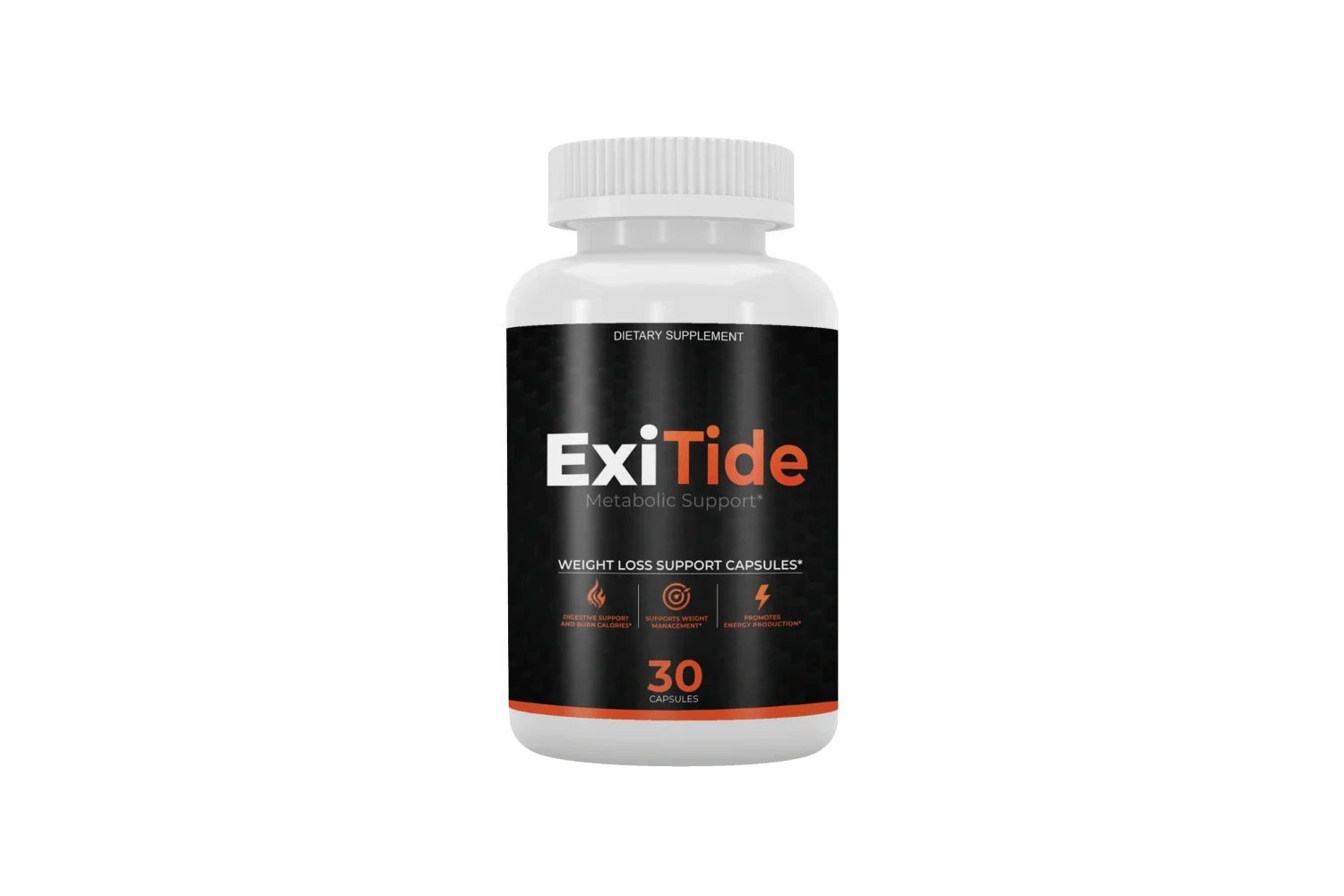
Want the seller's exact wording and the full panel?
Both the support lines and the label amounts are printed on the site, side by side.
$49 to $79 a bottle · 60-day money-back guarantee
See today’s price and guaranteeGetexitide earns money on orders placed through this website. The checkout shows the live price before any payment details are asked for.
What does appetite suppressant mean?
People use the phrase for very different things. Some mean a prescription medicine that a doctor decides on. Some mean an over-the-counter pill. Some mean a tea or a gummy sold with a bold promise.
ExiTide is none of those. It is a once-daily capsule sold as a dietary supplement. The seller's own page says it is not a medication and not a weight-loss drug. This desk repeats that line because it marks the edge of what is being sold.
So if you are searching for appetite suppressant medication, ExiTide is the wrong shelf. If you are looking for a supplement that includes a fibre meant to be taken before food, read on.
What does the seller say about appetite?
The seller prints five support lines. One of them reads: Supports appetite control and satiety. This site quotes that line. It does not adopt it as its own claim.
A support line describes a body function. It is not a promise of an outcome. The FDA expects the manufacturer to make sure such a line is truthful, and the label carries the statement that the lines have not been evaluated by the FDA.
No trial of the finished formula has been published. So the line stands as the seller's description, and the evidence behind it has to be read ingredient by ingredient.
How could a fibre make you feel full?
The idea is simple physics. Soluble fibre dissolves in water and forms a gel. The CDC describes the effect in the stomach: the gel slows digestion down, and because the fibre is not digested, it helps you feel full for longer.
Glucomannan, the fibre from konjac root, is a strong example. The NIH says it can absorb up to fifty times its own weight in water. That is why the label asks for a full glass of water, and why the capsule goes in before a meal and not after.
Timing matters too. Fifteen to thirty minutes gives the shell time to open and the fibre time to start taking up water. Taken with food, the same fibre simply mixes into the meal.
How big is 45 mg of fibre?
This is the honest part. One capsule holds 50 mg of konjac extract at 90% glucomannan. Ninety percent of 50 mg is 45 mg.
| Measure | Amount | How 45 mg compares |
|---|---|---|
| One ExiTide capsule | About 45 mg of glucomannan | The starting point |
| Glucomannan trials the NIH summarises | 1.24 to 3.99 g a day | About one twenty-eighth of the smallest dose, and one eighty-ninth of the largest |
| Adult fibre in the Dietary Guidelines | 22 to 34 g a day | About one five-hundredth of the low end |
So the fibre on this panel is a mechanism and not a supply. A bowl of oats, a pear and a cup of beans do the supplying. What 45 mg can do is swell on a fairly empty stomach, which is the reason it goes in ahead of the food.
What did the glucomannan trials find?
A meta-analysis of randomised trials, cited by the site, pooled studies of glucomannan in overweight and obese adults. It found no significant change in weight. The trials reported abdominal discomfort, diarrhoea and constipation among the side effects.
Those trials used grams, not milligrams. A capsule with 45 mg cannot lean on their results. But the same trials give no reason to expect that a small amount does more than a large one.
What do buyers say about appetite?
The seller's record does not print a satisfaction figure for appetite specifically. What it does record is that buyers describe a wait of four to eight weeks, and that six of the eight reviewers held in detail wanted more in week one.
Buyers on this desk's record mention three things most when they describe what they watched: appetite between meals, the afternoon dip and how digestion feels. That is a useful list to borrow, as the next section shows.
How could you judge your own appetite fairly?
Appetite is slippery. It changes with sleep, stress, weather and what you ate yesterday. So write things down before you start.
- Before your first capsule, note how hungry you feel between meals on a scale you invent, such as 1 to 5.
- Record it once a week, not once a day. Daily swings are larger than anything a capsule is likely to do.
- Change one thing at a time. A new capsule, a new diet and a new gym plan in the same week gives an answer you cannot attribute.
- Look again at week four and week eight. If week eight shows nothing, the guarantee is still open, and that is what it is for.
Whatever you find, treat it as your own result. Individual results vary, and food, sleep and activity still matter.
Who should be careful with a swelling fibre?
Anyone with a swallowing difficulty or a narrowed gullet has a specific question to ask a doctor. The NIH record includes seven cases of oesophageal blockage with tablet forms in Australia in 1984 and 1985, and says powdered and capsule forms have not been linked to that effect.
The label also excludes anyone under 18 and anyone pregnant or nursing, and asks anyone on medication to consult a physician first. A gel-forming fibre can slow the stomach, so an hour between the capsule and a prescription tablet is sensible.
Frequently asked questions
Is ExiTide an appetite suppressant?
No. It is a dietary supplement. The seller's page says Not a medication. Not a weight-loss drug. One of its support lines mentions appetite control and satiety, which this site quotes but does not adopt.
How much fibre is in an ExiTide capsule?
The konjac extract is 50 mg at 90% glucomannan, so about 45 mg of the fibre itself.
Will ExiTide make me feel full?
A soluble fibre can form a gel and slow digestion, but 45 mg is a very small amount compared with the grams used in trials. Results vary, and no trial of the finished formula has been published.
Is ExiTide a pill, a gummy or a tea?
It is a capsule with a hypromellose shell. It is not a gummy, tablet, powder, drops or tea.
How should I take ExiTide for best effect?
Follow the label: one capsule daily, preferably 15 to 30 minutes before a meal, with a full glass of water. Do not exceed one capsule a day.
Are there side effects from the fibre?
In the glucomannan trials, abdominal discomfort, diarrhoea and constipation were reported at gram doses. If wind or discomfort does not settle within two weeks, stop and ask a doctor.
Our view
ExiTide is not an appetite suppressant, and the seller does not say it is. It is a capsule with a gel-forming fibre in a small amount, taken ahead of a meal, alongside ten other ingredients.
If you want a medicine to curb hunger, that is a conversation for a doctor. If you want to test a simple daily supplement and keep honest notes, the 60-day window gives you a fair chance to do it. Expect a small tool, not a switch.
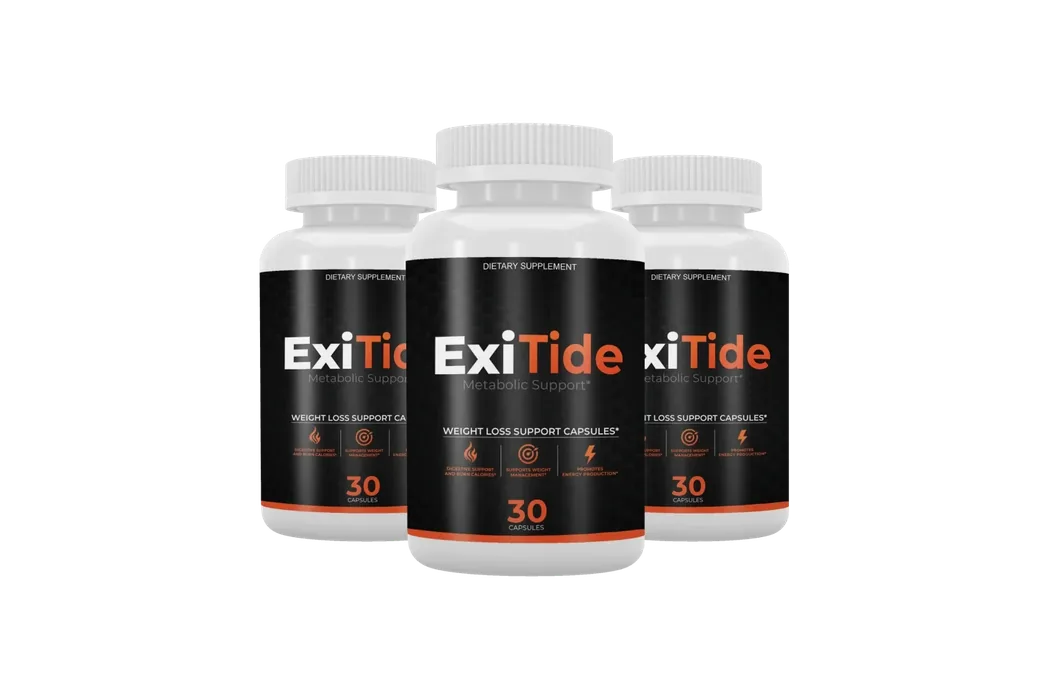
Happy to test it with honest notes?
Sixty days from the date of purchase to decide. See today's price and the guarantee before you choose a pack.
$49 to $79 a bottle · 60-day money-back guarantee
See today’s price and guaranteeGetexitide earns money on orders placed through this website. The checkout shows the live price before any payment details are asked for.
Last updated
Sources named on this website and used here
- NIH Office of Dietary Supplements. Dietary Supplements for Weight Loss: Fact Sheet for Health Professionals. https://ods.od.nih.gov/factsheets/WeightLoss-HealthProfessional/
- Centers for Disease Control and Prevention. Fiber: The Carb That Helps You Manage Diabetes. https://www.cdc.gov/diabetes/healthy-eating/fiber-helps-diabetes.html
- Onakpoya I, Posadzki P, Ernst E. The efficacy of glucomannan supplementation in overweight and obesity: a systematic review and meta-analysis of randomized clinical trials. J Am Coll Nutr. 2014;33(1):70-8. https://pubmed.ncbi.nlm.nih.gov/24533610/
- Onakpoya IJ, O'Sullivan J, Heneghan CJ. The effect of cactus pear (Opuntia ficus-indica) on body weight and cardiovascular risk factors: a systematic review and meta-analysis of randomized clinical trials. Nutrition. 2015;31(5):640-6. https://pubmed.ncbi.nlm.nih.gov/25837206/
- Vanderbeek PB, Fasano C, O'Malley G, et al. Esophageal obstruction from a hygroscopic pharmacobezoar containing glucomannan. Clin Toxicol (Phila). 2007;45(1):80-2. https://pubmed.ncbi.nlm.nih.gov/17357389/
- U.S. Food and Drug Administration. Structure/Function Claims. https://www.fda.gov/food/nutrition-food-labeling-and-critical-foods/structurefunction-claims