ExiTide Official Website › Metabolism Supplement Guide
A Guide To Reading A Metabolism Supplement Panel
A Supplement Facts panel has a fixed shape: a serving size, a servings count, a list of ingredients with an amount beside each, a percent Daily Value where one exists, and an other-ingredients line underneath. Learning to read those five parts tells you more than any marketing page will.
The serving size decides everything else
Every amount on a panel is per serving, and a serving is not always one capsule. A panel whose serving is three capsules carries a third of its printed amounts in each one — two products can look identical on the page and differ threefold in the hand.
Check the servings per container against the capsule count too: they match only when the serving is one capsule, and where they do not the bottle empties faster than the count suggests.
What an amount per serving is attached to
The figure beside a name is the weight of that named material in one serving. That sounds obvious, and it is where most misreadings start: the name is doing a great deal of work.
One hundred milligrams of a dried powder, of a four-to-one extract and of an extract standardised to 90% of a compound are three completely different quantities of anything you might care about. What changes is what the milligrams are made of, and the name is the only place the panel says so. Read the row as two halves: the name gives the kind of statement, the number the size of it.
What a 4:1 or a 10:1 extract means
A ratio describes a concentration step. Ten kilograms of bark reduced to one kilogram of powder is a 10:1 extract, and 100 mg of that powder started life as about a gram of bark — which is worth knowing, because it says the material was concentrated rather than simply dried.
It also stops there. A ratio says nothing about which compounds survived the extraction, which depends on the solvent, the plant part and the batch. An extract equivalent to a gram of bark is not a gram of bark, and a page writing it as though it were has changed the subject.
Why a standardisation is the stronger claim
A standardisation names a compound and states what proportion of the extract is made of it. Standardised to 90% glucomannan means nine tenths of that row is the fibre itself.
That single addition changes what a label is worth, because it makes the row arithmetic. Multiply the amount by the percentage and you have the delivered amount of a named compound — the only figure that can be set beside a research dose.
It is a specification rather than a measurement: it states what the maker's material is meant to contain, not what a laboratory found in your bottle. NCCIH puts the general case plainly, observing that oral curcumin products vary in how much curcumin they actually contain.
Doing the conversion, on a real panel
The bottle this desk sells prints all eleven amounts across four kinds of statement, which makes it a convenient panel to practise on.
| As the panel prints it | What the figure describes | What you can work out |
|---|---|---|
| Alpha Lipoic Acid 25 mg | A single compound, weighed | 25 mg. Nothing to convert, and nothing hidden. |
| Mangosteen Powder 100 mg | Whole dried material, weighed | 100 mg of powder. No concentration step and no named compound. |
| Prickly Pear Extract Powder 4:1, 100 mg | A concentration ratio | Roughly 400 mg of plant went in. What came out is unstated. |
| Cinnamon Bark Extract 10:1, 100 mg | A concentration ratio | Roughly 1 g of bark went in. Again, no compound is named. |
| Konjac Extract Fiber (Std. 90% Glucomannan) 50 mg | An extract with a named compound and a percentage | 90% of 50 mg, so about 45 mg of glucomannan. |
| Turmeric Extract (Std. 95% Curcumin) 15 mg | The same shape, a higher percentage | 95% of 15 mg, so about 14 mg of curcuminoids. |
| Resveratrol Extract (Std. 20% from Polygonum Cuspidatum) 12 mg | The same shape, a lower percentage | 20% of 12 mg, so 2.4 mg of resveratrol. |
Seven rows, four kinds of statement. Only the three standardised rows convert a printed milligram figure into an amount of a named compound, which is why they are the most useful rows on a panel.
Setting a converted figure beside a trial dose
A delivered amount is only meaningful next to something, and the something worth using is the dose the research gave people — printed in the abstract of most trials and in the methods of the rest.
Finding it takes a few minutes. Search the ingredient name with systematic review or randomised trial, open the record rather than a summary, and read the dose and the duration together.
Then divide. If a capsule delivers 45 mg of a fibre and the trials used between 1.24 and 3.99 g a day, it is carrying somewhere between a twenty-eighth and an eighty-ninth of a studied amount. Occasionally the division comes out the other way, which is worth noticing just as loudly.
Five ingredients, and the doses behind them
| Ingredient | The dose the research used | What the source is |
|---|---|---|
| Cinnamon | 120 mg to 6 g a day, for 4 to 18 weeks | Allen 2013, ten randomised trials pooled in 543 people |
| Glucomannan | 1.24 to 3.99 g a day for up to 12 weeks in one review; 1.2 to 15.1 g a day in an older one | the NIH fact sheet on weight-loss supplements, which summarises both |
| Curcuminoids | 80 mg a day at the very lowest, about 1,000 mg a day most commonly, up to 1,890 mg | Akbari 2019, 21 studies in 1,604 people |
| Resveratrol | 150 mg a day for 30 days | Timmers 2011, eleven men, a crossover design |
Read the middle column as a range rather than a target: a pooled review carries the doses of every trial in it, and several of these authors say the preferred dose is still unclear.
Why probiotics are counted rather than weighed
A colony-forming unit is one organism capable of multiplying, so a CFU count is a statement about how many are alive. Milligrams of a culture would describe a powder, most of which is not organism.
The definition every probiotic claim has to live inside is the ISAPP consensus statement: live microorganisms which, when administered in adequate amounts, confer a health benefit on the host. Adequate amounts is the load-bearing phrase, and a CFU count is the only part of a label that reaches it.
A strain designation is the next thing to look for, and the one most often missing. Probiotic research is strain-specific: the body-fat trial of Bifidobacterium breve used 20 billion CFU a day of one named strain, B-3. A panel giving only the species cannot borrow that result.
Why most rows carry a dagger instead
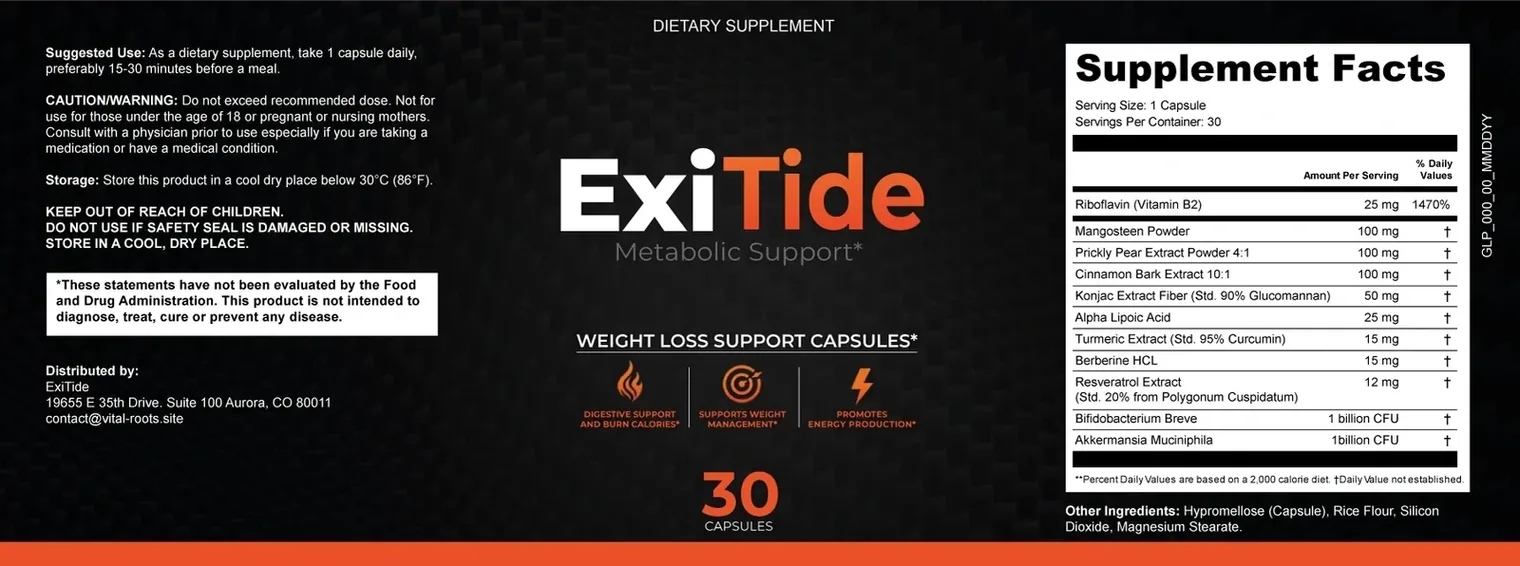
Where a percentage appears, read it against the reference intake rather than as a score. The NIH fact sheet on riboflavin gives an adult recommended intake of 1.3 mg a day for men and 1.1 mg for women, so 25 mg is about nineteen times it — and the 1,470% figure follows arithmetically.
A large percentage is not automatically a problem. For riboflavin no upper intake level has been set, absorption from a single dose tails off above roughly 27 mg, and the excess leaves in the urine, brightly.
What a plant name leaves open
Cinnamon is the clearest case in this category. Two plants are sold under the name, and NCCIH states that the types and parts of cinnamon have important differences in chemical composition. Cassia cinnamon contains coumarin, which has been linked to liver effects; ordinary culinary use rarely involves enough to matter, though prolonged use of a high-coumarin product could be an issue for sensitive people.
A panel printing cinnamon bark extract without a Latin name leaves that open, and no arithmetic will close it. Name the variable rather than invent a figure, and ask the seller.
What a good label in this category prints
Eight things, in rough order of how much they tell you.
- Every ingredient named, with its own amount. The strongest signal there is, and the one a proprietary blend removes.
- A standardisation wherever a compound is the point. A percentage and a compound name make a milligram figure comparable.
- A species, in Latin, for every botanical. Cinnamon is two different plants in common use, and the difference is chemical rather than cosmetic.
- The plant part. Bark, root, leaf and fruit are different materials from one organism.
- A strain code after every live species name. Probiotic evidence belongs to strains rather than species.
- CFU counted at the end of shelf life. That is the figure that reaches you, and most labels print neither.
- The other-ingredients line in full, with the shell named. Hypromellose and gelatin are not the same choice for everyone.
- A lot code and a date. The code traces a bottle to a production run; the date tells you its age.
What a panel cannot tell you at all
- ✓Whether the bottle holds what the panel says. A panel is a specification — only an assay on that lot is a measurement.
- ✓Whether the product works for you. No label has answered that, and one implying it has is telling you about the seller.
- ✓How old the bottle is. A lot code makes it traceable; the date beside it, where there is one, gives the age.
Who wrote this guide
This desk publishes what the label prints and says plainly where a figure is not published. The four claims below are the ones a sceptical reader can audit in ten minutes, which is the only reason to make them:
- The printed panel is the source. Every amount on this website is read off the ExiTide Supplement Facts panel in the seller’s own label artwork, in the panel’s order and the panel’s wording. Prices come from the seller’s order page, read on 18 September 2026, not from a review column.
- Nothing is rounded up or filled in. A 10:1 extract is printed as a 10:1 extract; a standardised percentage is carried through to the milligrams it represents; a live culture is printed in colony-forming units because that is how the panel counts it.
- Sources are real and linked in the sentence. Every study cited here was confirmed against its PubMed record before it was written down, and every government page was opened and checked by its title rather than assumed.
- Corrections change the date. Write to [email protected] and the review date at the foot of the page moves forward.
We earn when you buy. Getexitide is the USA Authorized Exitide Retailer named at the top of this page, and this website makes money on orders placed through it. That is exactly why the dose comparison, the three-star reviews and the six-of-eight reviewers who wanted more in week one are printed here: they are where our interest and yours pull apart, and you should be able to watch us choose.
Order support on +1 (302) 200-3480 and [email protected] handles tracking, changes, cancellations and refunds. It is not a sales line, and this website never presents it as a way to place an order: orders go through the checkout only.
Sources cited on this ExiTide page
- NIH Office of Dietary Supplements. Riboflavin: Fact Sheet for Health Professionals. https://ods.od.nih.gov/factsheets/Riboflavin-HealthProfessional/
- Allen RW, Schwartzman E, Baker WL, Coleman CI, Phung OJ. Cinnamon use in type 2 diabetes: an updated systematic review and meta-analysis. Ann Fam Med. 2013;11(5):452-9. https://pubmed.ncbi.nlm.nih.gov/24019277/
- National Center for Complementary and Integrative Health. Cinnamon: Usefulness and Safety. https://www.nccih.nih.gov/health/cinnamon
- NIH Office of Dietary Supplements. Dietary Supplements for Weight Loss: Fact Sheet for Health Professionals. https://ods.od.nih.gov/factsheets/WeightLoss-HealthProfessional/
- Akbari M, Lankarani KB, Tabrizi R, et al. The Effects of Curcumin on Weight Loss Among Patients With Metabolic Syndrome and Related Disorders: A Systematic Review and Meta-Analysis of Randomized Controlled Trials. Front Pharmacol. 2019;10:649. https://pubmed.ncbi.nlm.nih.gov/31249528/
- National Center for Complementary and Integrative Health. Turmeric: Usefulness and Safety. https://www.nccih.nih.gov/health/turmeric
- Timmers S, Konings E, Bilet L, et al. Calorie restriction-like effects of 30 days of resveratrol supplementation on energy metabolism and metabolic profile in obese humans. Cell Metab. 2011;14(5):612-22. https://pubmed.ncbi.nlm.nih.gov/22055504/
- Minami J, Iwabuchi N, Tanaka M, et al. Effects of Bifidobacterium breve B-3 on body fat reductions in pre-obese adults: a randomized, double-blind, placebo-controlled trial. Biosci Microbiota Food Health. 2018;37(3):67-75. https://pubmed.ncbi.nlm.nih.gov/30094122/
- Hill C, Guarner F, Reid G, et al. Expert consensus document. The International Scientific Association for Probiotics and Prebiotics consensus statement on the scope and appropriate use of the term probiotic. Nat Rev Gastroenterol Hepatol. 2014;11(8):506-14. https://pubmed.ncbi.nlm.nih.gov/24912386/
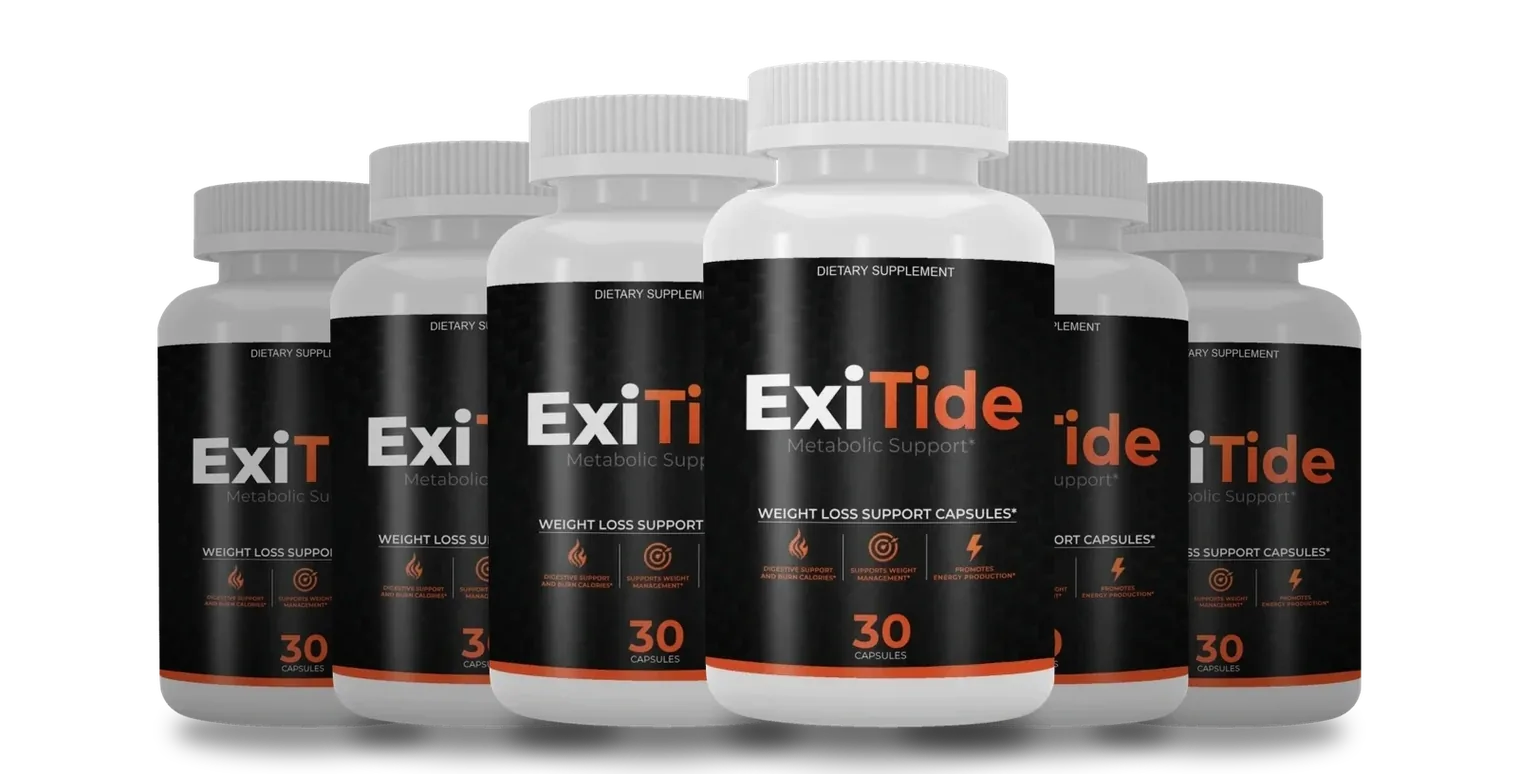
See how ExiTide scores against this checklist
Eleven named ingredients with every amount printed, and nine of them below the amounts the research used. Both facts are on the same page.
$49 to $79 a bottle · 60 days to change your mind
Order ExiTide On The Official Website60-day money-back guarantee · lot EXI-26/GE-7602 · prices read on 18 September 2026