ExiTide Official Website › Choosing A Metabolism Supplement
Choosing A Metabolism Supplement: A Fourteen-Row Checklist
Fourteen questions will separate most metabolism supplements from each other before you read a word of marketing: whether the ingredients are named, whether each one carries an amount, how extracts are described, how cultures are counted, whether a strain is given, whether a certificate exists, and whether one unit can be bought.
The fourteen questions, and why each matters
- Is every ingredient named? A blend gives a total and hides the split — a ceiling, not a description.
- Is an amount printed beside each one? Names without milligrams compare with nothing, including last year's version.
- Are the serving size and the servings count both printed? Without them no figure has a denominator.
- Does every extract carry a ratio or a standardisation? A ratio is useful; a standardisation converts.
- Are live cultures counted in CFU? Milligrams of a culture describe a powder rather than a number of organisms.
- Is a percent Daily Value shown where one exists? Its absence on a vitamin row says the panel was not built carefully.
- Is the other-ingredients line printed? It answers the shell question and the filler question at once.
- Is a lot code on the bottle? It makes one traceable to a run and matchable to an order.
- Is a strain code printed after each live species? Probiotic evidence belongs to strains; a species borrows nothing.
- Is a Latin species name given for every botanical? Common names cover more than one plant, cinnamon being the standing example.
- Do the amounts reach the research doses? The row most products fail, and the one most worth doing yourself.
- Is the certificate of analysis itself published? A number quoted on a website is a marking; a certificate has an assay and a date.
- Does the marketing name everything the panel prints? A listing shorter than the label is not dishonest, but notice the difference.
- Can one unit be bought? A minimum of two changes what trying something costs, and it interacts with the guarantee.
Running the checklist in five minutes
Find the panel, not the graphic
The listing artwork is a summary. Find the flat photograph of the back of the bottle and read that.
Take the top two rows first
Serving size and servings per container. A two-capsule serving halves every figure you are about to read.
Mark every row that converts
Any row with a percentage and a compound name multiplies out. Do it on the spot; it is the whole exercise.
Look up one dose, not eleven
Pick the ingredient the product is sold on and find what the research gave people. One honest comparison beats a table of guesses.
Read the commerce at the bottom
Smallest order, return window, who pays return postage. Those decide what a failed experiment costs.
This product, against its own checklist
| Question | ExiTide | Verdict |
|---|---|---|
| Is every ingredient named? | Eleven, by name | Yes |
| Is an amount printed beside each one? | All eleven | Yes |
| Are the serving size and the servings per container both printed? | One capsule, thirty servings | Yes |
| Does every extract carry a ratio or a standardisation? | Five extracts, five descriptions | Yes |
| Are live cultures counted in CFU rather than milligrams? | One billion apiece, twice | Yes |
| Is a percent Daily Value shown where one exists? | Riboflavin, 1,470% | Yes |
| Is the other-ingredients line printed, shell included? | Four of them, hypromellose named | Yes |
| Is a lot code carried on the bottle? | Lot EXI-26/GE-7602 | Yes |
| Is a strain code printed after each live species? | Species alone | No |
| Is a Latin species name given for every botanical? | One of the five carries one | No |
| Do the amounts reach the doses the research used? | Cinnamon alone; nine sit below | No |
| Is the certificate of analysis itself published? | A reference number stands in for it | No |
| Does the seller's listing name everything the panel prints? | Six of the eleven | No |
| Can a single bottle be bought to try it? | Two is the smallest order | No |
Eight yes, six no. A checklist that passes everything is worth nothing, so the six misses are in the same table as the eight.
The rows this product does not pass
No strain code on either live culture. The panel gives Bifidobacterium breve and Akkermansia muciniphila at a billion CFU apiece with no code after either, and that matters twice over for the second: the only human trial of Akkermansia used ten billion a day, with its significant findings in the pasteurised arm rather than the live one.
One Latin name across five botanicals. The resveratrol row names Polygonum cuspidatum. Cinnamon, mangosteen, prickly pear and turmeric are given by common name only — and cinnamon is the row where the species changes the chemistry.
Nine of eleven amounts sit below the research doses. The konjac fibre gives about 45 mg of glucomannan against the 1.24 to 3.99 g a day in the trials NIH summarises, and berberine is 15 mg against the one gram a day NCCIH names as the threshold. Cinnamon is the exception and a real one: 100 mg of a 10:1 extract sits inside the 120 mg to 6 g a day range studied.
The certificate is a reference rather than a document. A lot code and a certificate reference are both printed, which is more than most, and neither is an assay. Nor is a registered facility a verdict: the FDA says that registration does not denote approval of an establishment or of anything made in it.
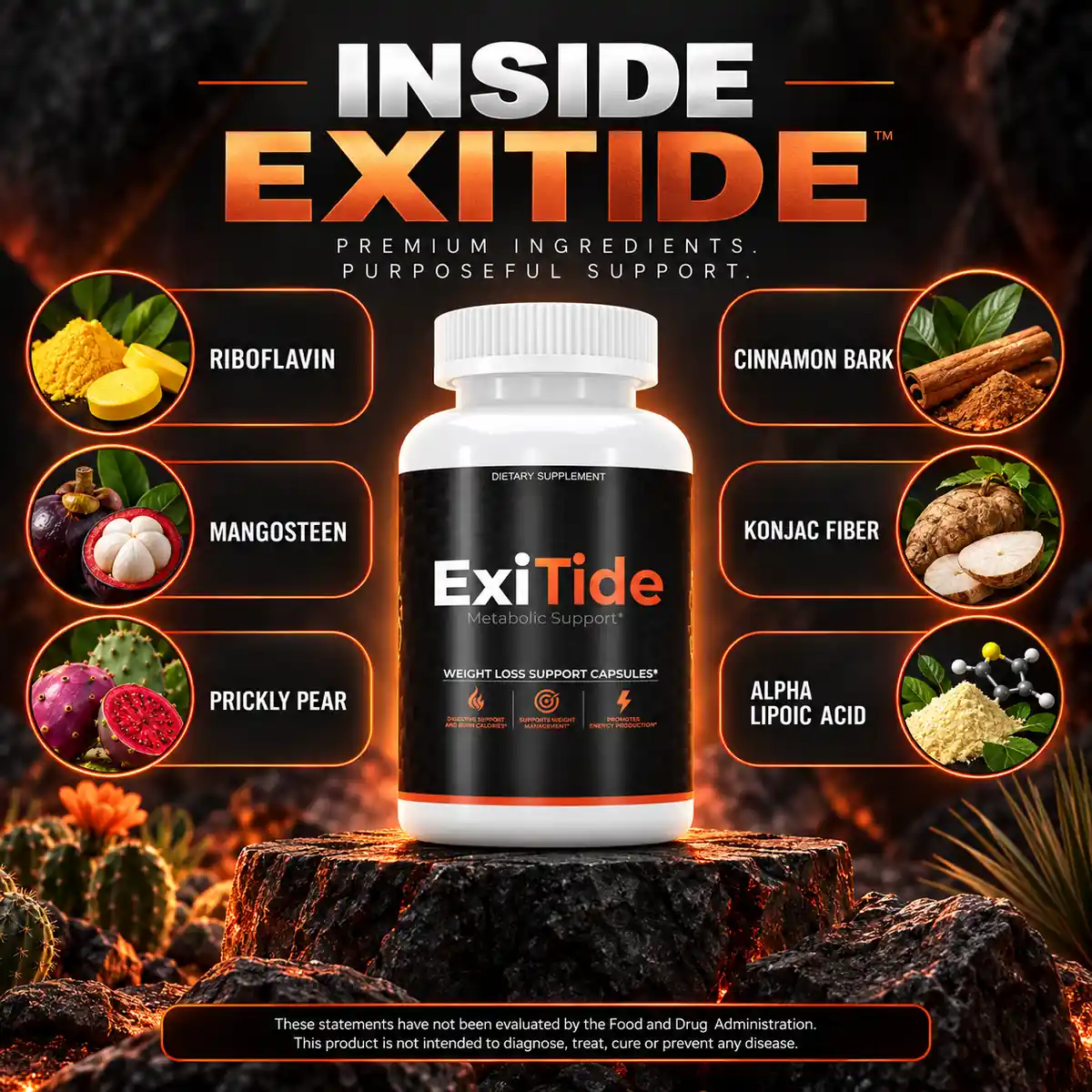
The listing names six of the eleven. Its ingredients graphic shows riboflavin, mangosteen, prickly pear, cinnamon bark, konjac fibre and alpha lipoic acid. Turmeric, berberine, resveratrol and both cultures are on the bottle and not on it.
Two bottles is the smallest order. At $158 plus $20 shipping, read from the seller's page on 18 September 2026, trying it costs $178 before return postage.
What the rows it passes are actually worth
Eight of fourteen is not a grade — and the eight are not evenly valuable. The first two carry most of the weight: every ingredient named, and an amount beside every one. In a category where a proprietary blend is the default, that alone puts a label ahead of most of what it sits beside.
The five extracts all carrying a ratio or a standardisation is the next most useful thing, because three of those standardisations convert — and those three sums make the dose comparison above possible.
The rest are hygiene rather than distinction: a percent Daily Value where one belongs, an other-ingredients line with the shell named, a lot code on the bottle.
The checklist, added up
Where the passes fall matters more than the total.
| Label transparency | 8 of 8 rows passed |
|---|---|
| Botanical detail | 1 of 5 named to species, no strain codes on either culture |
| Amounts against research doses | 1 of 11 inside the range the trials used |
| Paperwork | A lot code on the bottle, a certificate held as a reference |
| Trying it | Sixty capsules minimum, at $158 plus $20 shipping |
| Overall | 8 of 14 rows, and the eight fall on one side of the sheet |
Which rows should change a decision, and which not
A failed row is information rather than a verdict, and two of the six above weigh far more than the rest. The dose row and the strain row decide whether the research attached to an ingredient has anything to do with the capsule. An ingredient at a fiftieth of a trial dose is a name rather than a reason.
The other four are commerce and paperwork. A minimum order of two changes what an experiment costs but not what is in the bottle. The FTC puts the burden where it belongs, requiring adequate substantiation before an objective claim is made rather than after a buyer asks — which is the standard to hold a seller to when a row comes back empty.
How the checklist behaves on a proprietary blend
A proprietary blend fails the first two rows at once, and everything downstream becomes unanswerable. If eight botanicals share a single 750 mg total, no row converts, and the only honest thing anyone can say about the smallest item is that it is somewhere under 750 mg.
Read a blend total as a ceiling. The order of the names usually reflects descending weight, and that is the whole of what the label commits anyone to.
A blend is not automatically a bad product — there are real formulation reasons to use one. It is automatically an unreadable one, and the checklist stops there.
What this checklist deliberately leaves out
- ✓Whether the product works. Fourteen rows about a label cannot answer it, and a checklist claiming to would be what it warns about.
- ✓Taste, capsule size and how easy the bottle is to open, which between them decide whether a routine survives week three.
- ✓Price. A cheap label and an expensive one score identically here, and cost per day is a separate sum.
- ✓Whether it suits you, your medication or anything you are treated for.
The two checks that only happen once it arrives
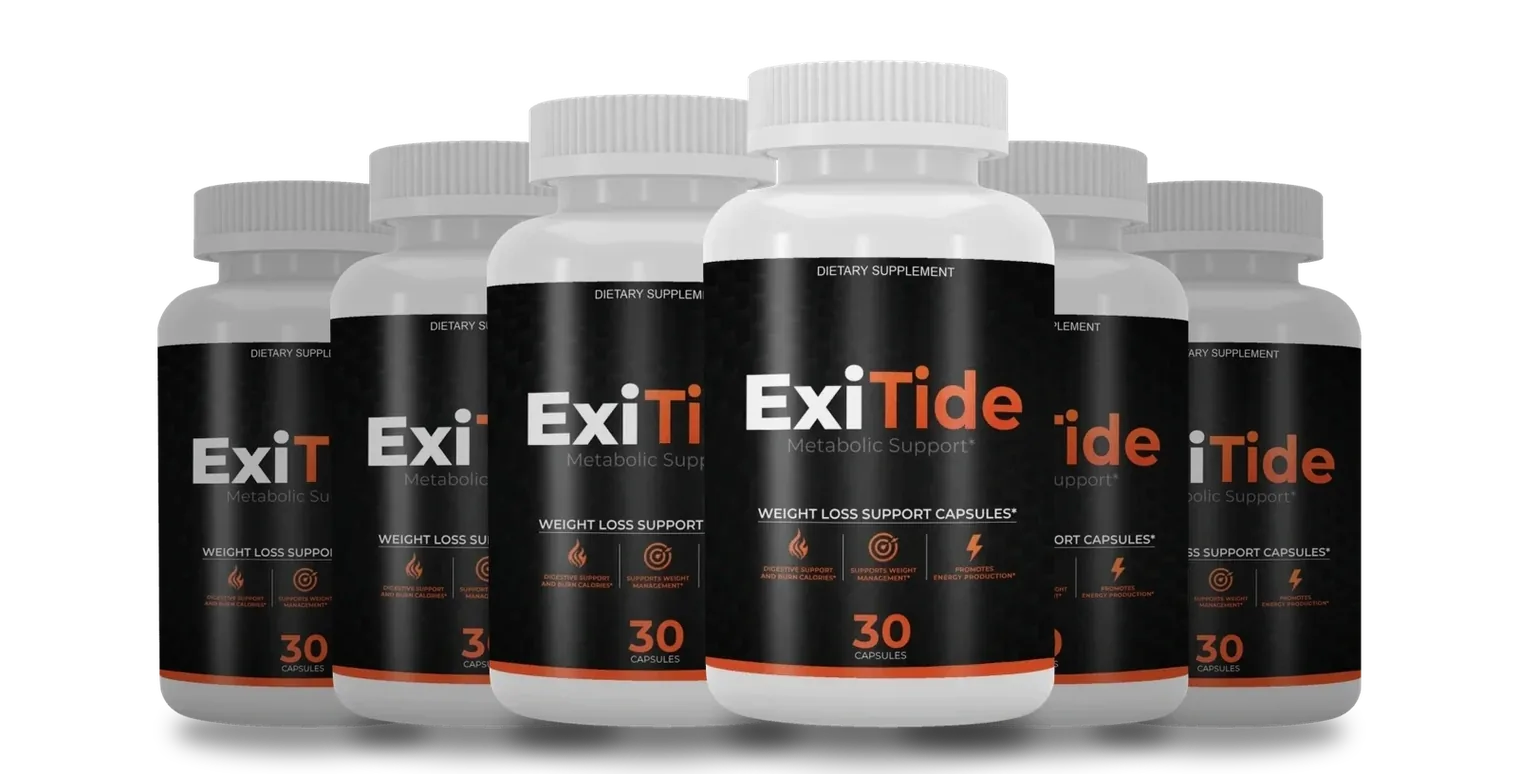
The first check is the seal. One that is broken, missing or not sitting flush is a reason to stop before the first capsule.
The second is the panel itself. Read the bottle you received rather than the page you bought from, and check the rows, the serving size and the lot code against what you expected — the bottle in your hand is the only authority on what is in it.
Who wrote this checklist
This desk publishes what the label prints and says plainly where a figure is not published. The four claims below are the ones a sceptical reader can audit in ten minutes, which is the only reason to make them:
- The printed panel is the source. Every amount on this website is read off the ExiTide Supplement Facts panel in the seller’s own label artwork, in the panel’s order and the panel’s wording. Prices come from the seller’s order page, read on 18 September 2026, not from a review column.
- Nothing is rounded up or filled in. A 10:1 extract is printed as a 10:1 extract; a standardised percentage is carried through to the milligrams it represents; a live culture is printed in colony-forming units because that is how the panel counts it.
- Sources are real and linked in the sentence. Every study cited here was confirmed against its PubMed record before it was written down, and every government page was opened and checked by its title rather than assumed.
- Corrections change the date. Write to [email protected] and the review date at the foot of the page moves forward.
We earn when you buy. Getexitide is the USA Authorized Exitide Retailer named at the top of this page, and this website makes money on orders placed through it. That is exactly why the dose comparison, the three-star reviews and the six-of-eight reviewers who wanted more in week one are printed here: they are where our interest and yours pull apart, and you should be able to watch us choose.
Order support on +1 (302) 200-3480 and [email protected] handles tracking, changes, cancellations and refunds. It is not a sales line, and this website never presents it as a way to place an order: orders go through the checkout only.
Sources cited on this ExiTide page
- Allen RW, Schwartzman E, Baker WL, Coleman CI, Phung OJ. Cinnamon use in type 2 diabetes: an updated systematic review and meta-analysis. Ann Fam Med. 2013;11(5):452-9. https://pubmed.ncbi.nlm.nih.gov/24019277/
- NIH Office of Dietary Supplements. Dietary Supplements for Weight Loss: Fact Sheet for Health Professionals. https://ods.od.nih.gov/factsheets/WeightLoss-HealthProfessional/
- National Center for Complementary and Integrative Health. Berberine and Weight Loss: What You Need To Know. https://www.nccih.nih.gov/health/berberine-and-weight-loss-what-you-need-to-know
- Depommier C, Everard A, Druart C, et al. Supplementation with Akkermansia muciniphila in overweight and obese human volunteers: a proof-of-concept exploratory study. Nat Med. 2019;25(7):1096-1103. https://pubmed.ncbi.nlm.nih.gov/31263284/
- U.S. Food and Drug Administration. Is It Really 'FDA Approved'? https://www.fda.gov/consumers/consumer-updates/it-really-fda-approved
- Federal Trade Commission. Health Products Compliance Guidance. https://www.ftc.gov/business-guidance/resources/health-products-compliance-guidance
See how ExiTide scores against this checklist
Eleven named ingredients with every amount printed, and nine of them below the amounts the research used. Both facts are on the same page.
$49 to $79 a bottle · 60 days to change your mind
Order ExiTide On The Official Website60-day money-back guarantee · lot EXI-26/GE-7602 · prices read on 18 September 2026