ExiTide Official Website › Blog › Akkermansia at 1 billion CFU
Akkermansia Muciniphila in ExiTide: What 1 Billion CFU Means
Akkermansia muciniphila in ExiTide is a live culture listed at 1 billion CFU per capsule. It is a gut bacterium named in 2004 for living on the mucus layer of the intestine. The only human trial used 10 billion a day for three months, ten times the capsule amount, so its result cannot be credited to this product.
- The organism. A mucin-eating gut bacterium first described in 2004 and named for the fact that it lives on the mucus layer of the intestine.
- The amount. 1 billion CFU a capsule. The only human trial used 10 billion a day for three months.
- The detail that matters most. The improvements that reached significance in that trial were in the pasteurised arm.
- The second culture. Bifidobacterium breve, also 1 billion CFU, with no strain code printed. Its body-fat trial used 20 billion CFU of one named strain.
What Akkermansia muciniphila is
The organism was described and named in 2004 by Derrien and colleagues, who isolated it from human faeces and worked out what it eats. It is strictly anaerobic, so oxygen kills it. It is Gram-negative and does not form spores, so it has no hardy dormant stage. And it grows on gastric mucin as its sole source of carbon and nitrogen, which is where the name comes from — muciniphila, mucin-loving.
Mucin is the protein that makes mucus. The lining of the gut is covered in a layer of it, and this bacterium lives in that layer and feeds on it. That is the whole of what the naming paper establishes. It is a taxonomy paper with no people in it and no health outcomes.
It is an unusual name to find on a retail panel at all, which is most of why this article exists. It is hard to grow, it dies in air — putting it in a capsule is a manufacturing problem before anything else.

Why anyone puts it in a capsule
The interest in Akkermansia comes from where it sits rather than from what it produces. It is one of the organisms found in the mucus layer of a healthy human gut, and the naming paper is why anyone can say with confidence what it lives on.
That is as far as this website will take the mechanism. The step from an organism living on mucin to a change a person would notice is the one the research has to make, and one exploratory trial in thirty-two people does not make it. A capsule with an interesting organism in it is an interesting capsule, not a proven one.
The question a buyer can actually answer is narrower — how much is in it, how does that compare with what was studied, and what does the label leave out.
The only human trial, and what it gave
Depommier 2019 is the first human study of Akkermansia supplementation, published in Nature Medicine. Forty overweight or obese insulin-resistant volunteers were enrolled and thirty-two completed. They took 10 billion bacteria a day for three months, either live or pasteurised, against placebo. The study was designed to test safety and tolerability first and reported both as acceptable.
The metabolic findings are the ones usually quoted: insulin sensitivity improved by 28.62%, insulinaemia fell by 34.08% and total cholesterol by 8.68%, with small falls in body weight, fat mass and hip circumference that did not reach significance.
The pasteurised arm is the one that reached significance
This is the detail that has to travel with the rest of it. The improvements above are reported for the pasteurised form. Pasteurised means heat-treated, which is to say dead, and a capsule counted in colony-forming units is counting live organisms because that is what the unit measures.
Three further things belong in the same paragraph as the headline numbers, and the paper states all three itself. It is an exploratory proof-of-concept study. It has thirty-two completers. And several of the authors hold patents on the organism and co-founded a company to commercialise it.
One billion CFU is a tenth of what that trial gave, of a live preparation rather than the pasteurised one, in a capsule that has not itself been tested.
The two counts, side by side
Setting the printed figures beside the trial figures is the fastest way to see what a CFU count on a label is claiming.
| Live culture | Printed on this panel | What the trial used |
|---|---|---|
| Akkermansia muciniphila | 1 billion CFU, species named, no strain code | 10 billion CFU a day for three months, live or pasteurised, in 32 completing volunteers. |
| Bifidobacterium breve | 1 billion CFU, species named, no strain code | 20 billion CFU a day of the strain B-3 for twelve weeks, in 80 pre-obese adults. |
| Both rows together | 2 billion CFU a capsule, once a day | Neither trial tested a combination, and none has tested this capsule. |
Colony-forming units count living organisms rather than weighing material, so these figures do not compare with any milligram amount on the panel.
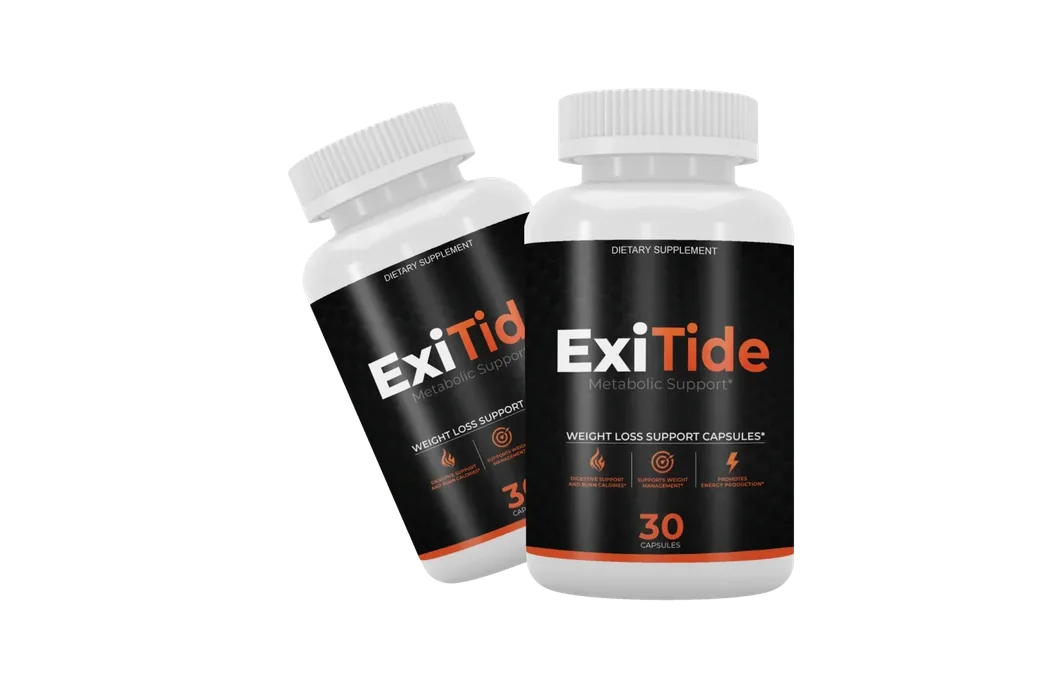
Two live cultures, both counted in the open
Eleven named ingredients with every amount printed, including both colony-forming unit counts, and sixty days from purchase to change your mind.
$49 to $79 a bottle · 60-day money-back guarantee
Order ExiTideThe second live culture, precisely
Bifidobacterium Breve sits directly above Akkermansia at the same 1 billion CFU, and gets less attention because the genus is familiar.
Minami 2018 ran a randomised, double-blind, placebo-controlled trial in 80 pre-obese adults with a body mass index between 25 and just under 30, over twelve weeks. Body fat mass and percentage body fat were significantly lower than placebo at weeks 8 and 12, and visceral fat area rose significantly in the placebo group only. No serious adverse effects were reported and no significant differences were found in blood parameters.
Two things qualify it. The dose was 20 billion CFU a day, twenty times what this capsule prints. And the organism was the specific strain B-3, owned by Morinaga, the company that ran the study. Both facts are in the paper and both belong beside the result.
Why a strain code matters
Two bacteria of the same species can differ as much as two dogs of the same species. Probiotic research is done on strains, catalogued with a code, because the traits that let one strain survive stomach acid or settle in the gut are not shared by every member of the species.
So a trial of B. breve B-3 is evidence about B-3. A panel that prints Bifidobacterium Breve and stops is naming the species accurately and leaving the strain question open, and the same is true of the Akkermansia row.
Adequate amounts, and why a strain code matters
The definition the field uses was set out by an expert panel in the ISAPP consensus statement: live microorganisms which when administered in adequate amounts confer a health benefit on the host. Two words in it do most of the work.
Live is the first, which is part of why the pasteurised Akkermansia result is awkward rather than convenient. Adequate amounts is the second, and the panel attached no number to it, because the adequate amount is whatever the trials on that particular strain used.
That is the frame for both rows. One billion CFU of a named species is a real amount of a real organism, printed openly, and it is not the amount any published trial of either organism used.
Reading any probiotic row on any label
A probiotic row has four parts and most labels print two. Knowing which two takes a few seconds and tells you how much of the marketing the row can support.
| Part of the row | What it tells you | What this panel prints |
|---|---|---|
| Genus and species | Which organism, to the level a textbook uses | Both, for both rows. |
| Strain designation | Which version was grown, and so which trials apply | Neither. B-3 is a strain code; no code appears here. |
| Colony-forming units | How many organisms are counted as alive | 1 billion each, printed plainly rather than inside a blend. |
| When the count is measured | Whether the number holds at the end of shelf life | Not stated. The label gives a storage line, below 30°C. |
Two of the four are printed, which is more than many panels manage and less than a strain-specific claim would need.
- A row with a genus, a species and a strain code can be matched to published trials. A row with two of the three can be matched to a genus and a hope.
- A CFU figure with no date qualifier is usually an at-manufacture count — and live organisms decline in storage.
- Storage below 30°C, as the bottle prints, means a cupboard rather than a car glovebox.
- A count printed per capsule is directly comparable with a trial dose. A count folded into a blend is comparable with nothing.
Who should be careful with a live culture
Live organisms are not risk-free for everybody, and the honest version of that names who. NCCIH puts it directly: the risk of harmful effects from probiotics is greater in people with severe illnesses or compromised immune systems, and cases of severe or fatal infection have been reported in premature infants given probiotics, about which the FDA has warned health care providers.
The same page makes two further points worth carrying. Probiotics sold as dietary supplements do not require FDA approval before they are marketed. And few studies have looked at probiotic safety in detail, so there is a lack of solid information on how often side effects occur and how severe they are.
The label's own caution is printed on the bottle: not for anyone under 18 or pregnant or nursing, and consult a physician before use if you take a medication or have a medical condition. The who-it-is-for page goes through the exclusions one at a time. Three groups have a specific reason to check before a first capsule rather than a general one:
- Anyone whose immune system is suppressed, by illness or by treatment, which is the group NCCIH names first.
- Anyone caring for a premature infant, because that is where the reported severe cases occurred.
- Anyone already taking a separate probiotic, since the counts add and this label prints a count rather than a ceiling.
What this desk will not say about either culture
Two live cultures on a panel is a real point of interest — and an easy thing to oversell.
- That Akkermansia is proven to improve insulin sensitivity in a live-culture capsule. The significant results in the only human trial are for the pasteurised form.
- That the strains in this bottle are the strains that were trialled. No strain code is printed for either row.
- That 1 billion CFU is an adequate amount. Adequate is set per strain, and neither trial used this figure.
- That a live culture reaches the gut in the numbers the label prints. Survival through the stomach is strain-dependent and this label claims nothing about it.
- That two cultures together do what either might do alone. No trial has tested the combination.
What can be said is in the table above: two named species, 1 billion CFU each, printed per capsule rather than folded into a blend. The ingredients page lists all eleven rows, and the article on the eleven printed amounts sets each one against the research on it.
Sources cited in this article
- Derrien M, Vaughan EE, Plugge CM, de Vos WM. Akkermansia muciniphila gen. nov., sp. nov., a human intestinal mucin-degrading bacterium. Int J Syst Evol Microbiol. 2004;54(Pt 5):1469-1476. https://pubmed.ncbi.nlm.nih.gov/15388697/
- Depommier C, Everard A, Druart C, et al. Supplementation with Akkermansia muciniphila in overweight and obese human volunteers: a proof-of-concept exploratory study. Nat Med. 2019;25(7):1096-1103. https://pubmed.ncbi.nlm.nih.gov/31263284/
- Minami J, Iwabuchi N, Tanaka M, et al. Effects of Bifidobacterium breve B-3 on body fat reductions in pre-obese adults: a randomized, double-blind, placebo-controlled trial. Biosci Microbiota Food Health. 2018;37(3):67-75. https://pubmed.ncbi.nlm.nih.gov/30094122/
- Hill C, Guarner F, Reid G, et al. Expert consensus document. The International Scientific Association for Probiotics and Prebiotics consensus statement on the scope and appropriate use of the term probiotic. Nat Rev Gastroenterol Hepatol. 2014;11(8):506-14. https://pubmed.ncbi.nlm.nih.gov/24912386/
- National Center for Complementary and Integrative Health. Probiotics: Usefulness and Safety. https://www.nccih.nih.gov/health/probiotics-usefulness-and-safety