ExiTide Official Website › Blog › Mangosteen and prickly pear
Mangosteen And Prickly Pear: Two 100 mg Rows With Very Little Human Evidence
Mangosteen powder and prickly pear extract are two of the three heaviest rows on the ExiTide panel, at 100 mg each, and they are the two least likely to be recognised by a reader who knows the other names. This article reads what the published human research on each actually amounts to.
- The amounts. Mangosteen powder, 100 mg, a name and a weight. Prickly pear extract powder 4:1, 100 mg, which stands behind about 400 mg of the plant.
- Mangosteen. The human trial found here used a juice blend at up to 18 oz a day, in 44 obese people, and one marker moved at the top dose. The hypoglycaemia reviews are of rodents.
- Prickly pear. One trial used 300 g of steamed cactus in fourteen people with diabetes. Another used 300 mg a day of a branded extract in 80 adults with gut dysbiosis. Neither is this powder.
- What the label leaves out. Which part of each plant, and how the powder was made. Both change what the row is.
The two rows as printed
The panel lists them as Mangosteen Powder, 100 mg, and Prickly Pear Extract Powder 4:1, 100 mg. Each is one of three rows at 100 mg, the heaviest figure printed anywhere on the panel, which is unusual for two ingredients most readers will not have met before reaching this label.
They are written in two different ways, and the difference is the first thing worth understanding. The mangosteen row is a name and a weight. The panel page says a name and a weight states the weight of the material itself and converts to nothing, because the figure is the material. The prickly pear row carries a ratio, 4:1, which says how much plant went in to make one part of powder. It converts to a plant equivalent of about 400 mg of cactus pear and to no compound at all.
Neither row says which part of the plant it is. Mangosteen has a pericarp, the purple rind, and a white edible flesh, and the research literature treats them as very different materials. Prickly pear has fleshy pads and a fruit, and its research is split the same way. The label leaves both questions open, and this article will not close them by assumption.
What mangosteen research consists of
Mangosteen, Garcinia mangostana, is a tropical fruit with a large published literature, and almost all of it is preclinical. The searches run for this article for human trials of mangosteen in overweight or obese people turned up very little, and what they found is small and specific to particular products.
The compound most often named is alpha-mangostin, a xanthone found in the pericarp. A review of the anti-obesity activity of xanthones from the fruit, Liu 2015 in Food & Function, summarises the chemical and pharmacological studies of the fruit and its constituents, including weight reduction, anti-adipogenesis, anti-inflammation and antioxidant activity, and it opens by saying the chemical principles and mechanisms behind the reported effects are unclear. It is a review of a fruit's compounds, not of a 100 mg powder, and a reader should hold the two apart.
The one human trial on inflammation in obese adults
The nearest thing to a human trial in this population is Udani 2009, a pilot dose-finding study in Nutrition Journal. It tested a proprietary mangosteen juice blend, XanGo Juice, in obese people with raised C-reactive protein, over eight weeks, in four groups: placebo and three doses of 3, 6 or 9 oz twice daily.
One hundred and twenty-two people were screened, 44 were randomised and 40 completed. High-sensitivity CRP fell from baseline in all three dose groups and rose in the placebo group, but the changes from baseline were not significant. The comparison of change against placebo was significant only for the highest dose, 18 oz a day, at p = 0.02. Other inflammatory cytokines and a marker of lipid peroxidation showed no significant difference. There was a trend towards a lower BMI in the juice groups, and no side effects were reported.
The authors call it a pilot and say larger studies are needed. Set beside the panel, four things stand out. It was a juice blend, not a powder. It was a branded product, not a generic material. The effective dose was 18 oz a day of liquid, which no 100 mg capsule resembles. And the outcome was an inflammation marker, not a change in weight or a metabolic outcome a reader might associate with the category.
The hypoglycaemia reviews, and what a rodent model is
A second body of evidence is often quoted for mangosteen and it is animal work. Chatatikun 2024 in Frontiers in Pharmacology is a systematic review and network meta-analysis of the hypoglycaemic activity of mangosteen extracts in diabetic rodent models. The primary outcome was blood glucose within two weeks, with cholesterol and triglycerides as secondary outcomes.
It is a properly conducted review, and it is a review of rodents. A rodent model is an animal made diabetic by diet or by a chemical, dosed by body weight, for a short time, under conditions no human resembles. Findings from such models are the reason a human trial gets proposed. They are not a substitute for one, and the distance between a mouse dose scaled by kilogram and a 100 mg powder in an adult is not something this article can bridge with a sentence.
What the safety literature covers
The safety evidence has the same shape. Setyawati 2023 in Heliyon is a systematic review of general toxicity studies of alpha-mangostin, the main xanthone in the pericarp. It found twenty eligible articles, reporting in vivo toxicity tests in animals, and estimated that the LD50 of alpha-mangostin lies between more than 15.48 mg/kg and 6,000 mg/kg or less, and the no-observed-adverse-effect level between less than 100 and 2,000 mg/kg or less.
Those ranges are wide, which is the honest finding: the authors say the results had not been well documented before, and their aim was to build a database. It is a toxicology paper about a single compound in animals. It does not say the 100 mg row is unsafe and it does not say it has been shown safe in humans, and this desk will not read it as either.
The small print, printed openly
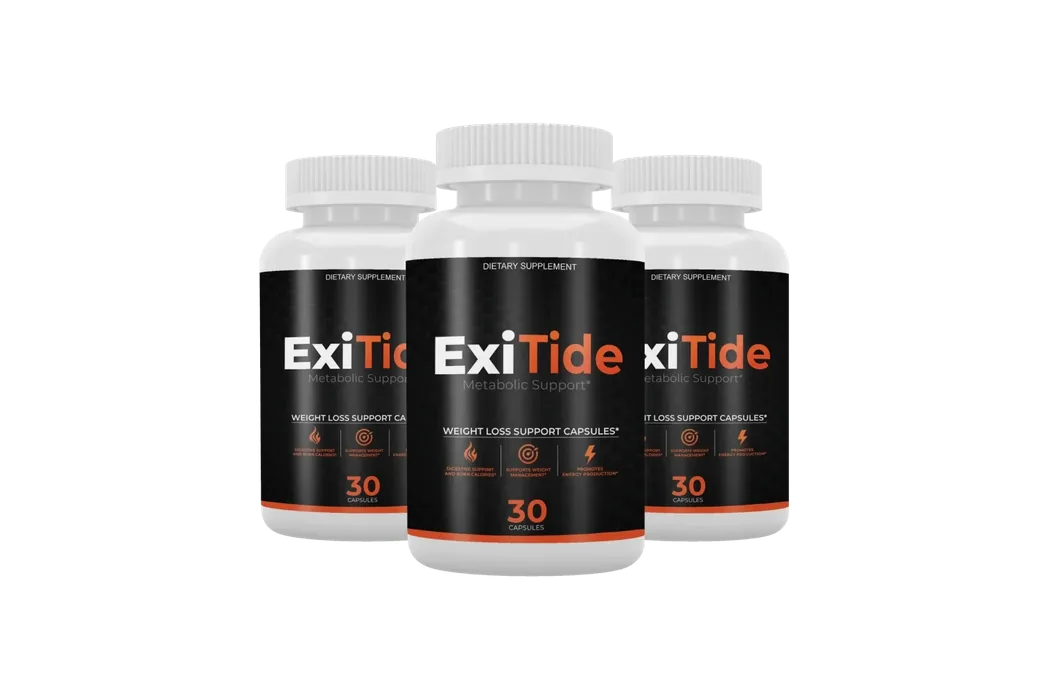
Eleven named ingredients, an amount beside each, and a panel that lets a reader ask exactly these questions. Sixty days from purchase to change your mind.
$49 to $79 a bottle · 60-day money-back guarantee
Order ExiTideWhat prickly pear research consists of
Prickly pear, Opuntia ficus-indica, is a cactus eaten as a fruit and, in Mexico, as a vegetable, where the pads are called nopal. Its human evidence is a little richer than mangosteen's but it splits into two kinds that do not describe the same thing: trials of the food and trials of a branded extract.
The food trial and the extract trial
López-Romero 2014 in the Journal of the Academy of Nutrition and Dietetics tested nopal itself. In the first study seven healthy people ate 50 g of available carbohydrate as glucose or as dehydrated nopal and the glycaemic index of nopal came out at 32.5. In the second, fourteen patients with type 2 diabetes ate a high-carbohydrate or a high-soy-protein breakfast with or without 300 g of steamed nopal. Nopal lowered the postprandial glucose area under the curve with the high-carbohydrate breakfast, and with the soy breakfast it reduced the GIP peaks and raised antioxidant activity after two hours.
That is a food eaten at a meal in a pilot of fourteen. Three hundred grams of steamed cactus is 300,000 mg of material. The 100 mg row stands behind about 400 mg of plant at a 4:1 ratio, so the food trial used roughly 750 times the plant equivalent, and it used the vegetable, not a dried extract.
Mellai 2024 in Nutrients is the extract trial. It was a randomised, double-blind study in 80 adults with gut dysbiosis, who took 300 mg a day of a branded Opuntia ficus-indica extract or maltodextrin for eight weeks. The extract shifted the microbiome, with a lower Firmicutes to Bacteroidetes ratio and more of the bacteria the authors call beneficial, and improved gastrointestinal quality-of-life scores. The affiliations list company research and development departments, which is not unusual for a branded ingredient and is a fact a reader should know.
The result concerns gut microbiota and digestive comfort in people with dysbiosis. It is not a trial of body weight or blood sugar, and the amount was three times the printed weight of this row, of a specific product whose relationship to a generic 4:1 powder the label cannot establish.
The gap between the printed row and the trials
Set the two rows against what was studied and the same shape appears twice.
| Row | Printed on this panel | What the nearest human trial gave |
|---|---|---|
| Mangosteen powder | 100 mg, part of the fruit not stated | Up to 18 oz a day of a branded juice blend, for eight weeks, in 44 obese adults |
| Prickly pear, food | Not applicable to the row | 300 g of steamed nopal at a meal, in 14 patients with diabetes |
| Prickly pear, extract | 100 mg of a 4:1 powder, about 400 mg of plant, part not stated | 300 mg a day of a branded extract for eight weeks, in 80 adults with gut dysbiosis |
The comparison is of what was given and to whom. The capsule has not itself been tested, and no trial here measured weight.
None of the three rows in that table is the row on the panel. In two of them the material is a different form, and in the third the outcome is a different outcome. That is not a criticism of the trials, which were designed to answer their own questions. It is a description of what a reader is being asked to assume when a plant name is placed on a label under a metabolism heading.
What this desk will not say
- That mangosteen powder at 100 mg lowers inflammation. The one human trial used a juice and reached significance at only the highest dose.
- That either plant affects blood sugar in a capsule. The mangosteen evidence is rodent work and the prickly pear evidence is a food eaten at a meal.
- That prickly pear at 100 mg changes the gut. The extract trial used three times the weight of a branded material.
- That either row is unsafe. Neither the toxicology review nor any trial here says so.
- That the two rows are filler. They are printed openly at the same weight as three other ingredients, which is exactly why they can be examined.
What can be said is on the table: two plant rows, each at 100 mg, each named without a part of the plant, each with human evidence that describes a different material or a different outcome. The ingredients page takes every row in turn, and the glucomannan article shows how a row with a directly relevant trial reads by comparison. The same exercise for two compounds with larger human records is in the resveratrol article and the berberine article.
Sources cited in this article
- Liu QY, Wang YT, Lin LG. New insights into the anti-obesity activity of xanthones from Garcinia mangostana. Food Funct. 2015;6(2):383-393. https://pubmed.ncbi.nlm.nih.gov/25520256/
- Udani JK, Singh BB, Barrett ML, Singh VJ. Evaluation of Mangosteen juice blend on biomarkers of inflammation in obese subjects: a pilot, dose finding study. Nutr J. 2009;8:48. https://pubmed.ncbi.nlm.nih.gov/19843321/
- Chatatikun M, Tedasen A, Phinyo P, et al. Hypoglycemic activity of Garcinia mangostana L. extracts on diabetes rodent models: A systematic review and network meta-analysis. Front Pharmacol. 2024;15:1472419. https://pubmed.ncbi.nlm.nih.gov/39415841/
- Setyawati LU, Nurhidayah W, Khairul Ikram NK, Mohd Fuad WE, Muchtaridi M. General toxicity studies of alpha mangostin from Garcinia mangostana: A systematic review. Heliyon. 2023;9(5):e16045. https://pubmed.ncbi.nlm.nih.gov/37215800/
- López-Romero P, Pichardo-Ontiveros E, Avila-Nava A, et al. The effect of nopal (Opuntia ficus indica) on postprandial blood glucose, incretins, and antioxidant activity in Mexican patients with type 2 diabetes after consumption of two different composition breakfasts. J Acad Nutr Diet. 2014;114(11):1811-1818. https://pubmed.ncbi.nlm.nih.gov/25132122/
- Mellai M, Allesina M, Edoardo B, et al. A Randomized, Double-Blind, Placebo-Controlled Trial: Efficacy of Opuntia ficus-indica Prebiotic Supplementation in Subjects with Gut Dysbiosis. Nutrients. 2024;16(5). https://pubmed.ncbi.nlm.nih.gov/38474715/