ExiTide Official Website › Blog › Resveratrol in ExiTide
Resveratrol in ExiTide: What 12 mg of Extract Means for One Capsule
Each ExiTide capsule lists 12 mg of resveratrol extract, standardised to 20% and taken from Polygonum cuspidatum. That works out to about 2.4 mg of resveratrol itself. The 30-day trial cited on this site used 150 mg a day, so one capsule holds a small fraction of that amount.
- One capsule holds 12 mg of resveratrol extract, the ninth of eleven rows on the printed panel.
- The extract is standardised to 20% resveratrol, so 12 mg of extract carries about 2.4 mg of resveratrol.
- The trial cited on this site gave eleven obese men 150 mg a day for 30 days.
- A 2021 umbrella review of 38 meta-analyses concluded that current evidence does not support resveratrol for cardiometabolic risk factors.
- No published clinical trial has tested the finished ExiTide capsule.
Want the whole panel in front of you?
Every amount, this one included, is printed on the bottle. The official order page lists the current price and the guarantee terms.
$49 to $79 a bottle · 60-day money-back guarantee
See today’s price and guaranteeGetexitide earns money on orders placed through this website. The checkout shows the live price before any payment details are asked for.
How much resveratrol is in one ExiTide capsule?
The supplement panel prints the row as “Resveratrol Extract (Std. 20% from Polygonum Cuspidatum)” and gives 12 mg beside it. That 12 mg is the weight of the extract. It is not the weight of resveratrol alone.
Because the extract is standardised to 20%, you can work out the resveratrol itself. Twenty percent of 12 mg is 2.4 mg. So one capsule carries about 2.4 mg of resveratrol, and since the label asks for one capsule a day, that is also the daily amount from this row.
| Measure | What the panel or the sum gives |
|---|---|
| Extract in one capsule | 12 mg |
| Standardisation | 20% resveratrol, from Polygonum cuspidatum |
| Resveratrol in one capsule | about 2.4 mg (12 mg x 20%) |
| Serving | 1 capsule; 30 servings a container |
| Percent Daily Value | A dagger: no Daily Value has been established |
The dagger is worth a line. A Daily Value can only be printed where one exists, and that is true of vitamins and minerals. Resveratrol is a plant compound, so the panel shows the dagger and says no more.
What does “Std. 20% from Polygonum Cuspidatum” mean?
“Std.” is short for standardised. It tells you the maker adjusted the extract so that a set share of it is one named compound. Here the compound is resveratrol and the share is 20%.
Polygonum cuspidatum is the plant name for Japanese knotweed. The ingredients page on this site says the resveratrol in ExiTide is extracted from that plant.
A standardisation is easy to convert, which is why this row can be turned into milligrams of resveratrol. Some other rows on the panel use a ratio instead, such as 4:1 or 10:1. A ratio says how much plant went in and does not say how much of any one compound came out. You can read both styles on the supplement facts page.
What did the research on resveratrol look at?
This site cites two papers on resveratrol, and they ask different questions.
- A 30-day trial. Timmers and colleagues, in 2011, gave eleven obese men 150 mg of resveratrol a day for thirty days. They reported AMPK activation, higher SIRT1 and PGC-1 alpha, and better mitochondrial function in muscle.
- An umbrella review. Zeraattalab-Motlagh and colleagues, in 2021, read 38 meta-analyses of resveratrol. They concluded that current evidence does not support resveratrol for cardiometabolic risk factors.
Neither paper tested ExiTide. The first used a single ingredient at a set dose in a small group. The second looked across many studies and was careful in what it concluded. Both are free to read through the links at the foot of this page.
Our reading is simple. Resveratrol is a well-studied name, and the studies are mixed. A label that prints a small amount of it is not borrowing a proven result, and the label does not claim one.
How does 2.4 mg compare with the trial amount?
This is the part that matters most for anyone who read the trial and then looked at the bottle.
| Measure | Resveratrol a day | Times the capsule |
|---|---|---|
| One ExiTide capsule | about 2.4 mg | 1 |
| Dose in the 30-day trial | 150 mg | 62.5 |
The last figure is plain division: 150 divided by 2.4 is 62.5. The trial dose is more than sixty times what one capsule supplies.
The ingredients page on this site reads the other rows the same way, setting each printed amount beside the amounts used in the research it cites. The panel prints plain figures, and so does this page.
A gap like this does not make the row pointless. It does mean you cannot lean on the trial to guess what one capsule will do.
Where does resveratrol sit among the other ten rows?
Of the nine rows weighed in milligrams, resveratrol extract is the lightest at 12 mg. Berberine HCL and turmeric extract come next at 15 mg each. Alpha lipoic acid and riboflavin are 25 mg each, konjac fibre is 50 mg, and mangosteen powder, prickly pear extract and cinnamon bark extract are 100 mg each. The two live cultures are counted in colony-forming units, at 1 billion CFU each.
So resveratrol is a small part of the fill by weight. The panel works as a whole set of eleven rows, and the label groups them under “Metabolic Support”. For a row-by-row walk through every amount, see the eleven amounts against the research, or the ingredients page.
If you want to read about the other two low rows, we have a page on berberine at 15 mg and one on turmeric extract at 15 mg.
What should I know before taking a capsule with resveratrol?
This site holds no side effect report that is specific to resveratrol at this amount. That is a statement about what is published here. It does not prove that nobody could react to it.
The cautions that count are printed on the bottle and apply to the whole capsule. Do not exceed the recommended dose. Do not use it under the age of 18, or if you are pregnant or nursing. Speak to a physician first if you take medicine or have a medical condition.
The suggested use is one capsule daily, preferably 15 to 30 minutes before a meal, with a full glass of water. The how to take ExiTide page explains why the water matters. Our safety article covers the rows that deserve more attention than this one, namely berberine and the konjac fibre.
What is not published about resveratrol in ExiTide?
A calm reader will want to note a few gaps.
- The brand or supplier of the resveratrol extract is not printed.
- No test result for this row is published. The lot code and the certificate reference on the bottle are markings, not a laboratory report.
- The finished capsule has no published trial, so no one can say how 2.4 mg behaves alongside the other ten rows.
- The label does not say how long to take it beyond the suggested use of one capsule daily.
Frequently asked questions
How much resveratrol is in ExiTide?
Each capsule lists 12 mg of resveratrol extract, standardised to 20%. That is about 2.4 mg of resveratrol, and because the serving is one capsule, it is also the amount in a day.
Is the resveratrol in ExiTide the same amount as in the trial?
No. The 30-day trial cited on this site used 150 mg of resveratrol a day. One capsule holds about 2.4 mg, so the trial dose is 62.5 times larger.
Where does the resveratrol in ExiTide come from?
The panel says Polygonum cuspidatum, the plant also called Japanese knotweed. The row is an extract standardised to 20% resveratrol.
Our view
Resveratrol is a small, honest row. The label tells you what it is, where it comes from and how much extract there is. What it cannot do is borrow results from a trial that used more than sixty times as much.
If you like a fully printed panel and you are happy to judge the capsule yourself over several weeks, this row is no reason to hold back. If you want trial-sized amounts of one ingredient, this is not that product. A fair buyer weighs both, and speaks to a doctor first when medicines or health conditions are in the picture.
ExiTide is a dietary supplement. It is not a drug and it is not approved by the FDA, and no dietary supplement is.
If the panel suits you, the terms are in the open
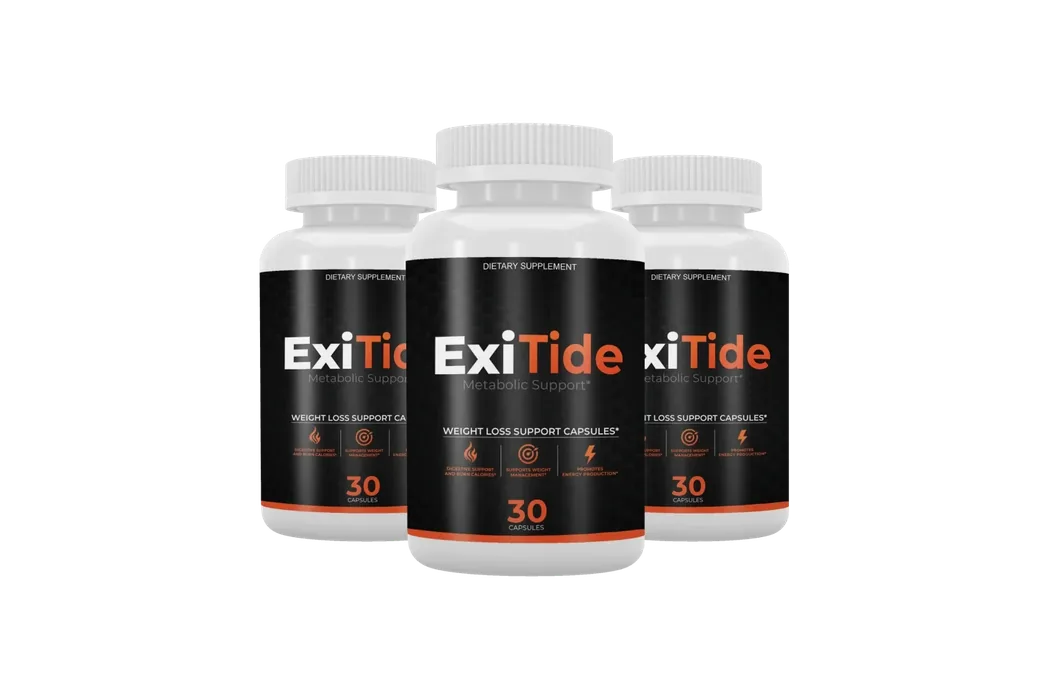
Three bottles is 90 days of capsules, while the guarantee window is 60 days from purchase. See today's price and terms before you choose a pack.
$49 to $79 a bottle · 60-day money-back guarantee
See today’s price and guaranteeGetexitide earns money on orders placed through this website. The checkout shows the live price before any payment details are asked for.
Last updated
Sources named on this website and used here
- Timmers S, Konings E, Bilet L, et al. Calorie restriction-like effects of 30 days of resveratrol supplementation on energy metabolism and metabolic profile in obese humans. Cell Metab. 2011;14(5):612-22. https://pubmed.ncbi.nlm.nih.gov/22055504/
- Zeraattalab-Motlagh S, Jayedi A, Shab-Bidar S. The effects of resveratrol supplementation in patients with type 2 diabetes, metabolic syndrome, and nonalcoholic fatty liver disease: an umbrella review of meta-analyses of randomized controlled trials. Am J Clin Nutr. 2021;114(5):1675-1685. https://pubmed.ncbi.nlm.nih.gov/34320173/